

D&T Hydraulics: Turning Grant Funding Into a Long-Term Manufacturing Strategy
Client: D&T Hydraulics & Engineering Pty Ltd
Sector: Advanced manufacturing, hydraulic cylinder repairs and remanufacturing
Location: Paget, Mackay, Queensland
Support provided: Grant strategy, project planning, business case development, application writing, evidence mapping and post-approval reporting support
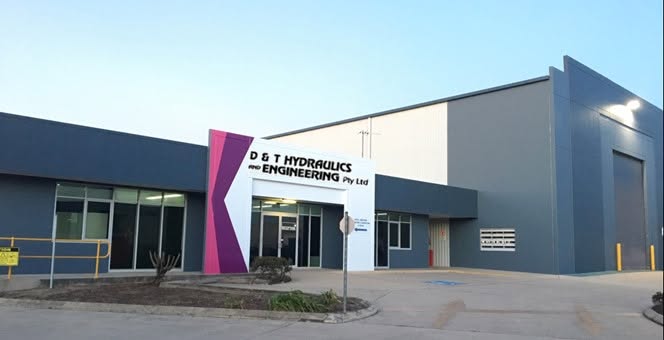
The client
D&T Hydraulics is a long-standing Mackay manufacturer, operating since 1981 and supporting mining, agriculture and heavy industry across Mackay and the Bowen Basin.
The business specialises in hydraulic cylinder repairs, remanufacturing, reclamation and new equipment builds. Its work sits at the centre of regional industry: keeping major machinery, plant and equipment operating safely and efficiently.
For D&T, grant funding was not treated as a one-off opportunity.
It became part of a staged business strategy.
From 2022 to 2025, NAVIGATE Business Solutions Australia supported D&T across multiple successful Made in Queensland and Manufacturing Hubs Grant Program projects.
Together, these projects supported more than $6.4 million in manufacturing investment, with more than $3.2 million in funding secured across digital systems, productivity improvements, advanced repair technology and additive remanufacturing capability.
The goal was clear: strengthen productivity, build advanced manufacturing capability, protect skilled jobs and position the business for higher-value work in Queensland.
The challenge
D&T had strong technical capability and a clear market need.
The next stage was about structure.
The business was assessing several connected priorities:
- improving inspection accuracy and reducing manual measurement time
- strengthening production traceability
- integrating better systems across finance, procurement, production, inventory and reporting
- investing in advanced manufacturing equipment
- upskilling staff around new technology
- reducing reliance on interstate and offshore repair pathways for major mining components
- building capability in laser metal deposition, laser cladding and additive remanufacturingng components
Each project had merit.
But not every good business project is automatically a strong grant project.
That is where manufacturers often lose time.
They know they need to invest. They know the business case makes sense internally. But they are not always across what funding is available, what government is looking for, or how to decide which project should lead.
The strategic task was deciding how to sequence the projects, how to prove the commercial case, and how to align each investment with the right funding pathway.
That is where NAVIGATE’s role extended beyond application writing.
NAVIGATE’s approach
NAVIGATE worked with D&T to turn technical workshop priorities into fundable business cases.
That meant translating operational needs into the language funding bodies assess:
productivity, competitiveness, advanced manufacturing capability, job retention, skills development, supply chain resilience and measurable commercial impact.
Across D&T’s funding journey, NAVIGATE supported planning, applications, grant management, milestone reporting and claims linked to:
- Made in Queensland Round 5 – MiQ5154: Enabling D&T Hydraulics’ digital future
- Made in Queensland Round 6 – MiQ6151: Advanced manufacturing project focused on laser metal deposition
- Made in Queensland Round 7 – MiQ7109: Hydraulics and Engineering Metallurgy Evolution Program, including 8 kW laser cladding, automated grinding and rotatable beds
- Manufacturing Hubs Grant Program Rounds 1 & 2 – MHGP00030: Advanced productivity through cutting-edge technology
- Manufacturing Hubs Grant Program Round 4 – MHGP400007: Welding and Additive ReManufacturing Systems Project, known as WaAReMs
This was not a “write the grant and submit it” process.
It was a staged funding strategy built around where the business was heading.
The strategy
NAVIGATE helped frame D&T’s growth pathway across three connected levels.
1. Operational productivity
Early planning focused on bottlenecks inside the workshop.
D&T’s gland inspection process relied on manual measurement, paper-based reporting and time-intensive inspection of complex internal features.
The project planning process helped assess whether Coordinate Measuring Machine technology could reduce inspection time, improve reporting accuracy and strengthen quality assurance.
The Manufacturing Hubs Grant Program projects also supported D&T’s investment in advanced productivity and welding and additive remanufacturing systems.
This turned workshop issues into measurable productivity cases.
It also gave D&T stronger evidence for future funding conversations.
2. Digital control and traceability
The next layer focused on systems.
Through Made in Queensland Round 5, D&T progressed the Enabling D&T Hydraulics Digital Future project.
As manufacturers grow, disconnected systems can become a constraint.
D&T identified the need for better integration across finance, procurement, inventory, job costing, HSEQ, workforce management, dashboards and production reporting.
ERP and MES planning gave the business a clearer pathway to improve visibility and control.
That mattered strategically.
It showed that D&T was not simply buying equipment, but also building the systems needed to manage more complex, higher-value manufacturing work.
3. Advanced manufacturing capability
The later Made in Queensland projects built on that foundation.
Made in Queensland Round 6 focused on Laser Metal Deposition, with funding of $1,360,022.50 supporting a total project value of approximately $2.72 million.
Made in Queensland Round 7 then supported the Hydraulics and Engineering Metallurgy Evolution Program, including 8 kW laser cladding, automated grinding and rotatable beds.
These projects positioned D&T to strengthen large-scale repair, reclamation and remanufacturing capability.
The business case was built around clear commercial and industry outcomes:
- keeping more advanced repair work in Queensland
- reducing reliance on interstate and offshore service pathways
- improving productivity and quality
- supporting skilled regional manufacturing jobs
- extending the life of major machinery components
- strengthening D&T’s competitiveness in mining and heavy industry supply chains
The projects were not presented as equipment for equipment’s sake.
They were positioned as a step-change in regional manufacturing capability.
The outcome
DD&T’s funded project outcomes show why strategic planning matters.
Across the 2022–2025 funding pathway, D&T secured more than $3.2 million in funding across more than $6.4 million in manufacturing investment.
This included:
- $156,520 through Made in Queensland Round 5
- $1,360,022.50 through Made in Queensland Round 6
- $1,139,977.50 through Made in Queensland Round 7
- $177,285 through Manufacturing Hubs Grant Program Rounds 1 & 2
- $374,000 through Manufacturing Hubs Grant Program Round 4
Through these projects, the business strengthened capability across digital systems, productivity improvements, laser metal deposition, laser cladding, automated grinding, bearing repair, machining and additive remanufacturing.
Reported outcomes included:
- 7 new full-time roles created
- 7 employees upskilled
- continued protection of core Queensland-based technical capability
- improved repair and remanufacturing capacity
- stronger competitiveness in regional industry supply chains
- a deliberate focus on consolidating Australian market capability before progressing offshore expansion
That final point is important.
Strong grant strategy does not assume market conditions stay static.
It creates a defensible plan, then supports the business to report clearly when conditions shift.
D&T’s reporting showed commercial discipline. The business protected capability, strengthened its workforce and focused on sustainable implementation.
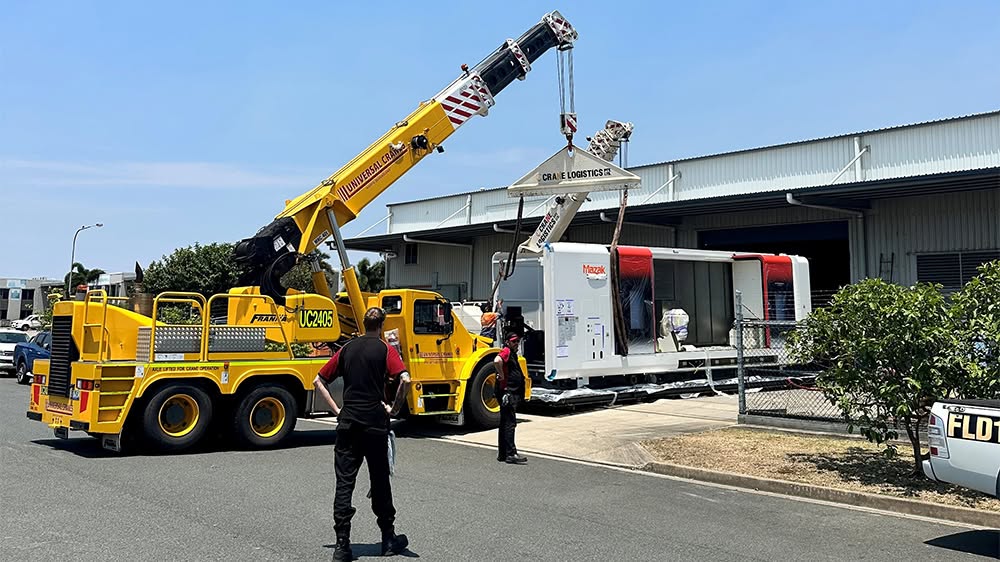
Why this case matters
The D&T project demonstrates the difference between grant writing and strategic grant consulting.
Grant writing turns a project into a submission.
Strategic grant consulting turns a business plan into a staged investment pathway.
D&T’s funding journey was built around more than eligibility.
It connected workshop productivity, digital systems, advanced equipment, workforce development and regional manufacturing competitiveness into one clear narrative.
Many manufacturers are in the same position.
They have the ideas. They know what needs to change. They may have equipment, systems or workforce priorities sitting in the background for years.
But they are not always across what is out there, what is coming next, or how to move early enough to be competitive.
That is where NAVIGATE adds value.
We help clients identify the right project, shape the evidence, test the commercial logic and position the application around outcomes funders need to see.
Looking ahead
D&T Hydraulics’ investment pathway reflects the future of regional manufacturing.
Advanced equipment matters.
But capability is built through planning, systems, people and evidence.
NAVIGATE’s role was to bring those pieces together.
We are not here to push businesses into applications that do not make sense. We are here to help them understand what is out there, move early, and make a strong decision before committing time and money.
For manufacturers considering major equipment, automation or digital systems projects, the lesson is simple:
Start before the grant opens.
The strongest applications are built from strategy, not last-minute paperwork.
And that is what NAVIGATE does best.